Best AI Task Automation Tools for Real Time Triggers (2026)
You need an automation tool that reacts the moment a trigger fires, not one that waits for a manual check-in. Most task platforms still lag on real-time responses, which costs your team minutes on every delayed assignment. By the end of this article, you will know which tools handle latency, integration depth, and mobile access best, and you will have a clear #1 pick to test first. For related context, see our guide to How to Write About Africa: A Clear, Practical Guide.
We compare six AI task automation tools for real-time triggers, starting with Tasks.Bot, which stands out for its WhatsApp-native workflow and GPS-based automation. For each option, we break down what matters most: trigger speed, setup effort, and how well the tool fits teams working from phones. You will leave with a concrete shortlist and a decision framework for pricing and team size.
What to Look For in AI Task Automation Tools for Real-Time Triggers
When evaluating AI task automation tools for real-time triggers, focus on three critical dimensions: latency (how quickly a trigger fires after an event), integration depth (how many apps and data sources the tool connects to), and mobile accessibility (whether field teams can act on triggers from their phones). These three factors determine whether your automation feels instant or sluggish in daily operations.
For latency, sub-second response times are ideal for urgent tasks like fraud alerts or system failures. However, a 1 to 5 second window may suffice for most workflows, such as lead notifications or inventory updates. Ask vendors for their typical trigger-to-action delay before committing.
Integration depth matters because your triggers come from many places. Common sources include webhooks, API calls, email, SMS, and IoT devices. Check if the tool supports these natively or if you need custom code to connect them.
Mobile accessibility is critical for field staff who are away from their desks. They need push notifications and a mobile-friendly interface to respond quickly. A tool that only works on desktop will create bottlenecks in real-time workflows.
Latency, Integration Depth, and Mobile Accessibility
Latency is the time between an event (like a customer order) and the trigger that creates a task; integration depth determines if the tool can listen to your existing systems; mobile accessibility ensures your team can act on triggers from anywhere. Measure latency in three bands: low latency is under 500ms, medium is 1 to 2 seconds, and high is 5 seconds or more. For most business processes, medium latency is acceptable, but time-sensitive operations demand the low band.
Integration depth separates easy setups from painful ones. Tools with pre-built connectors for popular apps like Slack, Google Sheets, and CRMs are far simpler to configure than those requiring custom API work. If a lead fills out a form on your website, the tool should immediately create a task in your team's WhatsApp group with a push notification. That level of connectivity requires robust native integrations.
Mobile accessibility goes beyond having an app. The interface must be responsive on small screens, and notifications should be actionable directly from the lock screen. Field technicians, sales reps, and remote workers all need to approve, reassign, or complete tasks without logging into a desktop.
During a trial, test these specific capabilities:
- Does the tool offer a mobile app with push notifications?
- Can you set trigger conditions with conditional logic and rule-based automation?
- Does it support voice commands for hands-free task creation?
- Can GPS coordinates act as a trigger for location-based workflows?
- Are webhooks and API triggers available without custom development?
- How quickly does a test event reach a notification on your phone?
Testing these elements during a free trial reveals whether the tool handles event-driven automation at the speed your team needs. Skip tools that cannot demonstrate real-time processing with your actual data sources.
1. Tasks.Bot - Best Overall
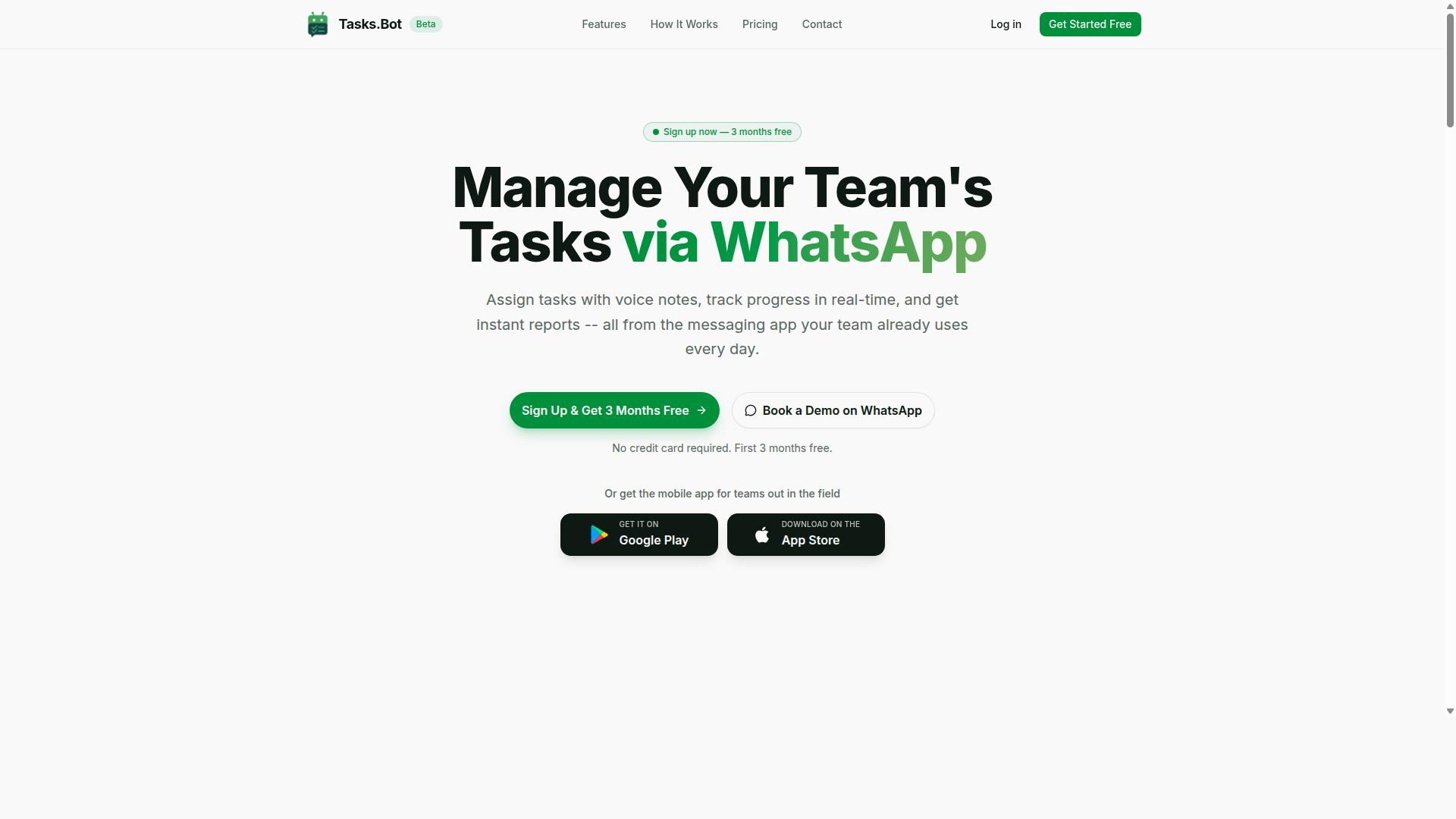
Tasks.Bot stands out as the best overall for real-time triggers because it operates entirely within WhatsApp, the app your team already uses, and uses AI to understand natural language and voice notes for instant task creation. This approach removes the friction of training staff on a new platform while keeping event-driven automation accessible to everyone.
The platform is built around voice note task creation, automatic task assignment, and smart deadline reminders. Approvals and automations handle routine approvals, while instant reports give managers a live view of work as it happens. Task orchestration ties these pieces together, so a single trigger can set off a full action sequence without manual follow-up.
For field teams, Tasks.Bot also offers a mobile app for Android and iOS. This app supports push notifications, voice capture, and a home screen widget, making it a practical choice for teams that work outside the office. The result is a trigger-based workflow system that feels native to how teams already communicate.
WhatsApp-Native Automation with Voice and GPS Triggers
Tasks.Bot's automation can be triggered by voice commands (e.g., a field agent says 'New order from Acme Corp') or by GPS events (e.g., when an agent enters a geofenced area), and it immediately creates tasks with deadlines and assignments. The AI parses the message, extracts the intent, and builds a structured task without any manual data entry.
Here is a concrete workflow: a field agent sends a voice note describing a site visit. Tasks.Bot parses it, creates a task, assigns it to the right person, and sets a reminder. The entire process happens in seconds, and the task appears in the team's WhatsApp feed with all relevant details attached.
The zero-installation benefit is a major advantage. Team members do not need to install anything or create new accounts, which removes a common barrier to adoption. The platform also offers face-verified attendance tracking, which can act as a trigger for check-in and check-out events. That data integrates with shifts, leave, and hours management, so payroll and scheduling stay in sync with real-time field activity.
Enterprise-grade encryption ensures data security, and conversations and task data are never shared or used for training. A 3-month free trial with no credit card required makes it easy to test the workflow before committing.
2. Reminderly.ai
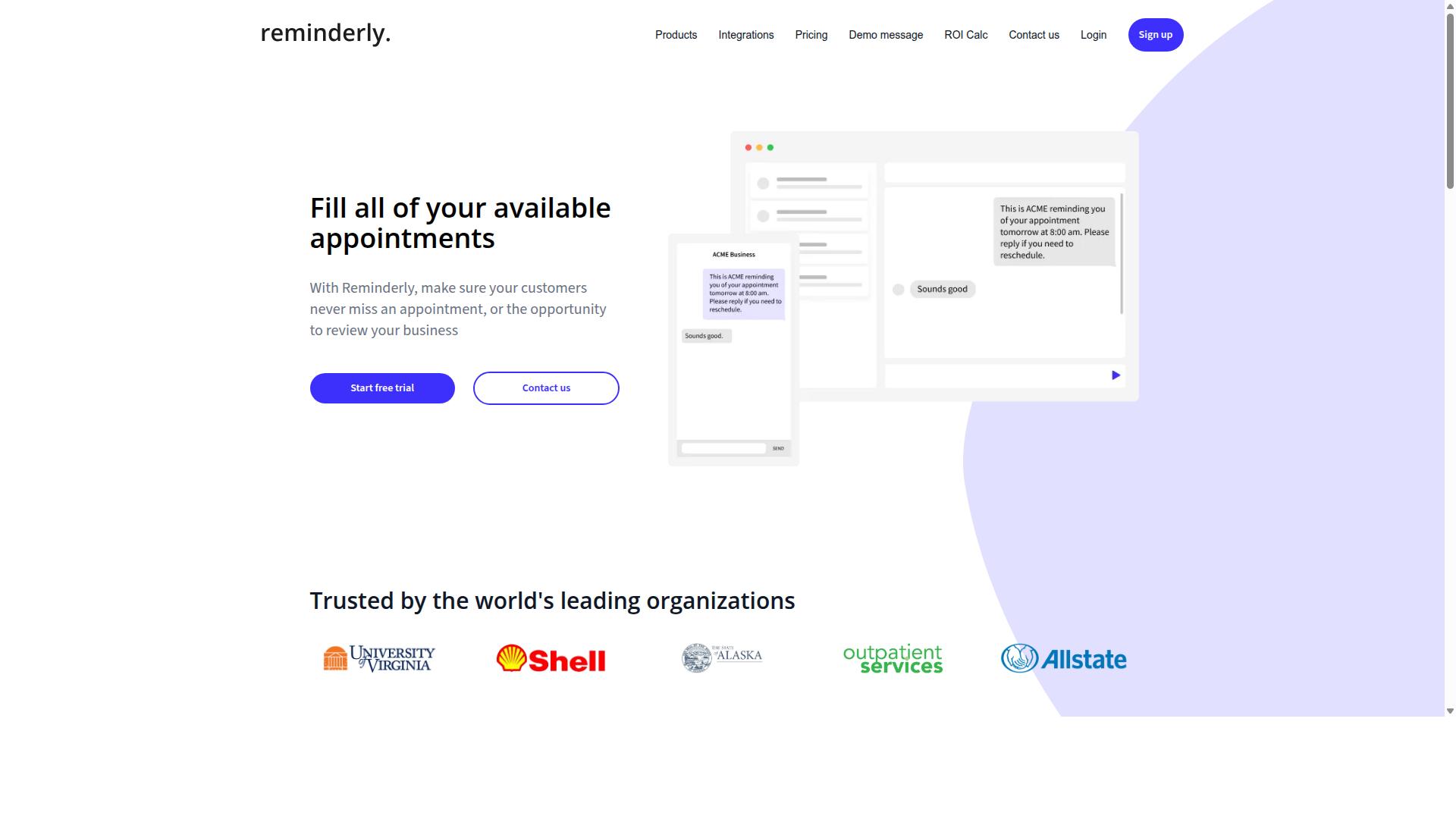
Reminderly.ai is a cloud-based reminder and task automation tool that focuses on scheduled notifications and recurring tasks, but its real-time trigger capabilities are more limited compared to dedicated workflow automation platforms.
The platform excels at time-based reminders, such as daily stand-ups, deadline alerts, and recurring check-ins. It integrates with popular calendar services, which makes it easy for teams to sync existing schedules and receive push notifications when items are due.
Where Reminderly.ai falls short is in event-driven automation. It lacks advanced triggers like webhooks, API listeners, or GPS-based events that many modern automation tools support. Users who need conditional logic based on real-time data will find the platform restrictive.
For simple task reminders and personal productivity, Reminderly.ai is a solid choice. However, for complex multi-step automations that require trigger-based workflows and action sequences, it may not provide the flexibility that power users expect. Teams with basic scheduling needs will likely find it sufficient, while those seeking intelligent automation should look elsewhere.
3. TaskRio
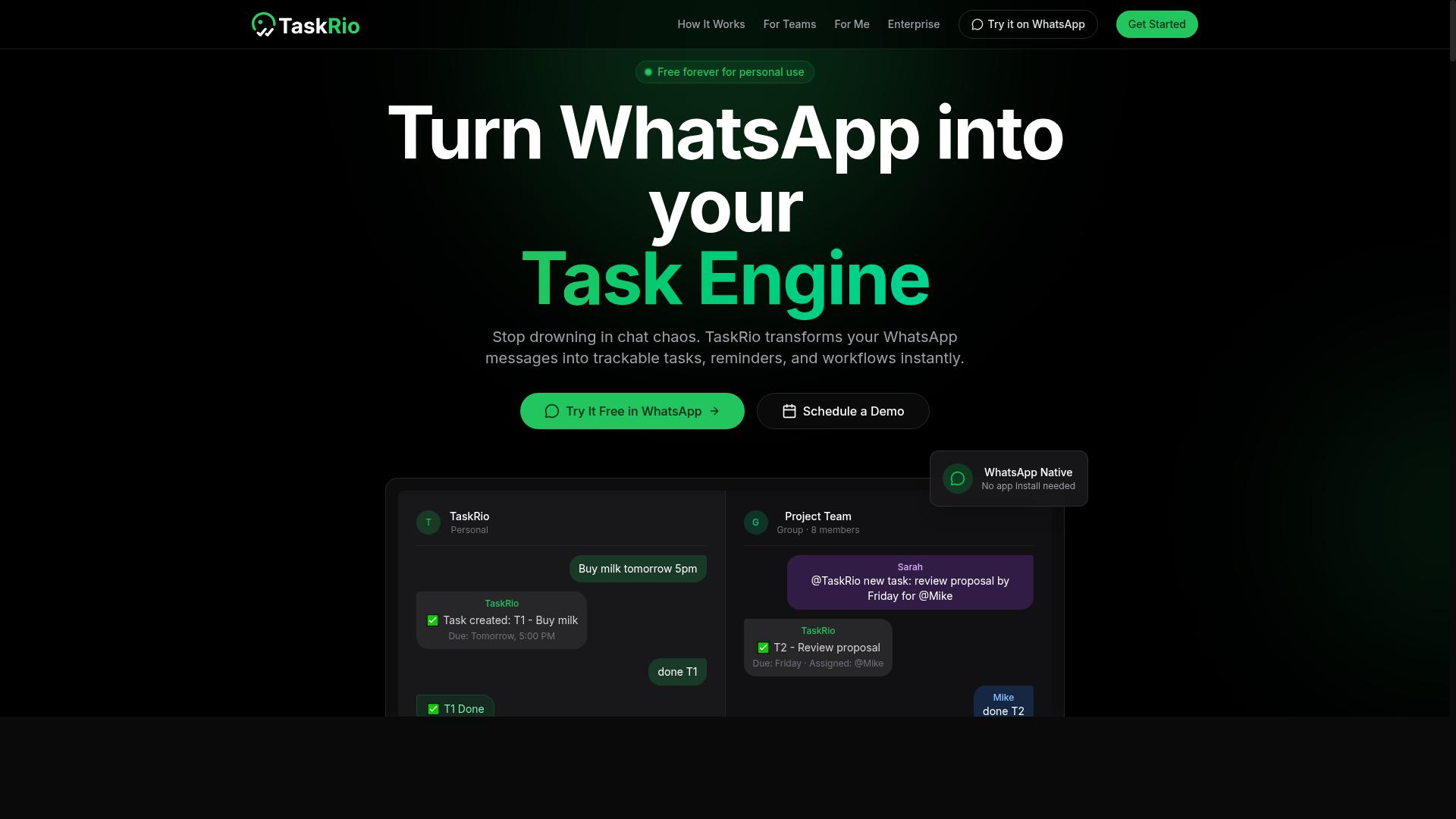
TaskRio is a no-code workflow automation tool that allows you to build trigger-based workflows using a visual builder, with support for webhooks and API triggers for real-time data. It sits in a middle ground between consumer-friendly automation apps and full developer platforms. The visual builder helps you map out action sequences without writing code from scratch.
The platform shines when you need conditional logic and event-driven automation. You can set trigger conditions that evaluate incoming data, then route tasks down different paths based on the results. This makes it a solid option for teams that need intelligent automation beyond simple if-this-then-that rules.
TaskRio provides a visual dashboard for monitoring task progress across your workflows. This gives you visibility into which automations are running, which ones are waiting on triggers, and where bottlenecks might appear. For teams managing multiple real-time triggers, that oversight matters.
Be prepared for a steeper learning curve than consumer-focused tools. TaskRio assumes some familiarity with webhooks, API triggers, and data payloads. Users who are comfortable with technical concepts will get the most value, while absolute beginners might find the setup process challenging.
4. Karo.bot
Karo.bot is an AI-powered assistant that automates routine tasks through rule-based logic, but its real-time trigger support is primarily limited to chat-based commands. Users interact with the platform by typing natural language instructions, and the system interprets those inputs to fire the appropriate action sequences.
The tool relies on conditional logic to execute predefined workflows. This makes it straightforward for teams to set up simple if-this-then-that patterns without writing code. However, its architecture is not built around external event sources such as webhooks, API triggers, or IoT signals. Real-time data arriving from outside the chat interface may not be captured automatically.
For small teams that want a conversational layer over their daily operations, this approach can work well. Trigger-based workflows initiated by typed commands reduce the learning curve compared to more complex automation platforms. Team members can ask the assistant to run a report, update a record, or send a notification simply by phrasing the request in plain language.
That said, organizations needing event-driven automation from streaming data or third-party systems will likely hit limitations. If your use case involves serverless functions, Kafka triggers, or MQTT events, Karo.bot may not be the right fit. Evaluate whether chat-based initiation covers your real-time processing needs before committing.
5. The Sarah AI
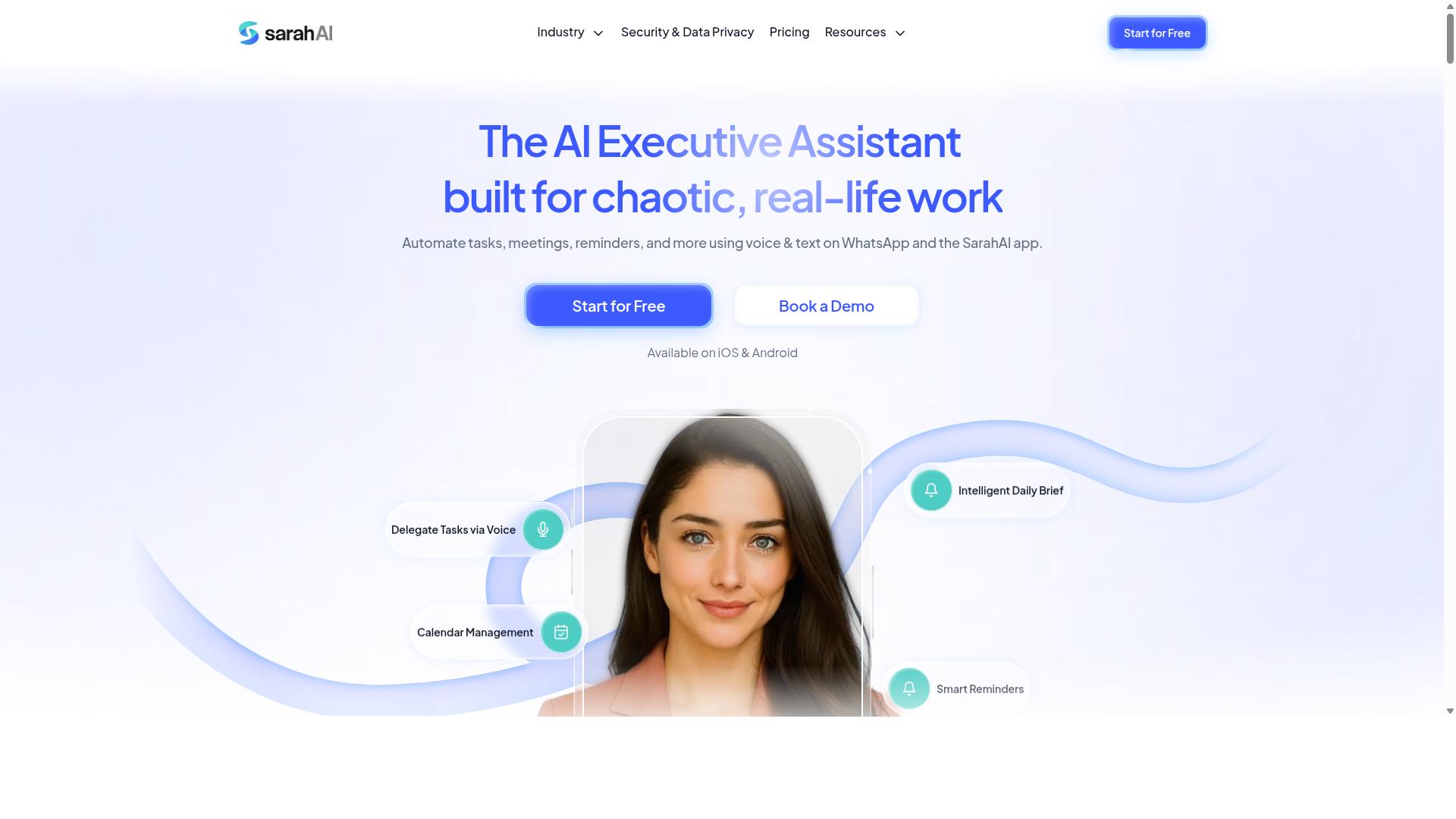
The Sarah AI is an intelligent automation platform that uses AI agents to interpret natural language inputs and trigger tasks, but its real-time capabilities depend on the integration complexity. It stands out for its ability to parse unstructured data from sources like emails and chat messages, converting messy inputs into structured, actionable tasks.
For teams dealing with high volumes of inbound communication, this parsing ability reduces manual data entry. The platform supports API triggers for real-time data ingestion, which means it can react to events as they happen rather than on a fixed schedule. This makes it a viable option for event-driven automation scenarios where response time matters.
However, the setup process is not entirely beginner-friendly. Configuring the API triggers and webhooks typically requires more technical expertise than a purely no-code automation platform. Users comfortable with low-code environments will find the flexibility appealing, but non-technical teams may face a steeper learning curve.
One of its more advanced features is predictive task assignment. The AI agents can analyze incoming work and route it to the appropriate person or system based on historical patterns. While this adds a layer of intelligence, research suggests that the accuracy of such predictions improves over time as the system learns your specific workflows.
6. Zoye AI
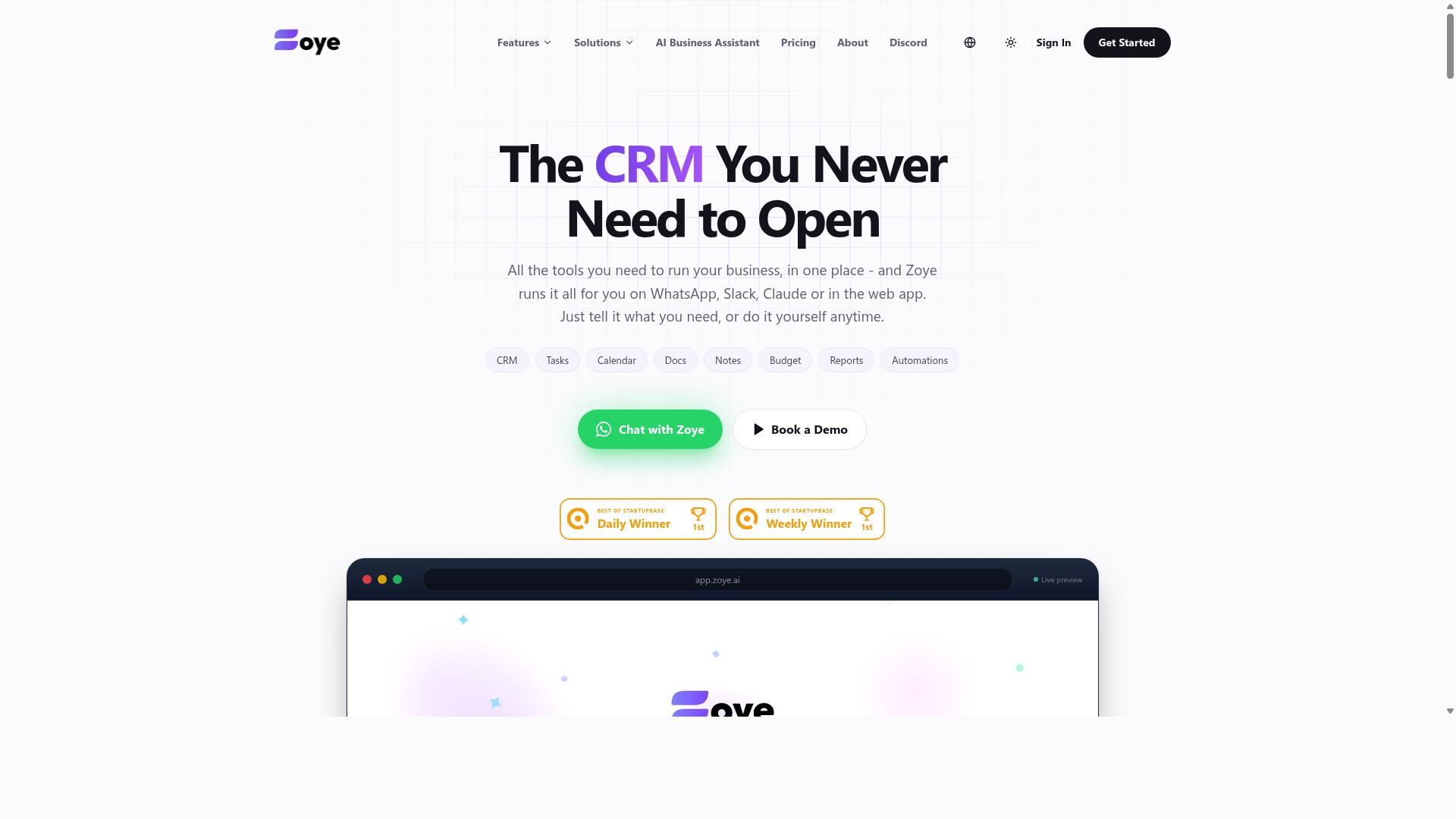
Zoye AI is an automation platform that specializes in event-driven workflows, with support for event listeners and streaming data sources like Kafka and MQTT for real-time triggers. This architecture makes it a strong fit for organizations that process high-throughput event streams across distributed systems.
For enterprise teams, Zoye AI supports serverless functions and lambda triggers, which allow automation to scale dynamically with incoming data volume. This means real-time processing can expand or contract without manual intervention, which is valuable when trigger volumes spike unpredictably. The platform is designed to handle complex event routing and orchestration across multiple systems simultaneously.
However, the enterprise focus comes with a trade-off. For small teams or simple use cases, the platform may be overkill. The configuration overhead and infrastructure requirements can outweigh the benefits when you only need occasional webhook triggers or basic task scheduling. Teams evaluating Zoye AI should consider whether their event volume justifies the complexity. For lighter real-time automation needs, a more streamlined tool with straightforward API triggers and conditional logic may deliver faster time-to-value.
How to Choose the Right Option
Choosing the right AI task automation tool depends on your team's size, budget, and the complexity of your workflows, so evaluate pricing models, deployment speed, and how well the tool scales with your team.
Start by assessing your team's technical expertise. No-code tools are easier for non-technical users, while low-code platforms suit teams with some developer capacity. If your team relies on WhatsApp for daily communication, especially with field staff, prioritize tools that work together with messaging apps rather than forcing a new communication habit.
Consider the number of team members and whether mobile access is essential. Field teams need push notifications and real-time data on their phones, not just desktop dashboards. Mobile-first automation tools reduce friction and keep remote workers aligned with trigger-based workflows.
Finally, evaluate the pricing structure. Per-seat pricing can get expensive as you grow, while flat fees offer predictable costs. Tools with free trials or demos are ideal for testing, so use that period to verify that the tool handles your real-time triggers and event listeners before committing.
Pricing Models, Deployment Speed, and Team Size Fit
Pricing models vary from per-member monthly fees to flat enterprise rates; deployment speed ranges from instant (SaaS) to weeks (on-premise); and team size fit determines whether a tool is overkill or insufficient.
Common pricing models include per-seat, tiered, and usage-based plans. Per-seat pricing typically runs $5 to $50 per user per month, while tiered plans bundle features at different price points. Usage-based models charge for the volume of automated actions, which suits teams with unpredictable workloads.
Deployment speed matters when you need immediate results. SaaS tools are ready in minutes with no infrastructure setup, while complex enterprise platforms may take weeks to configure. For most small and mid-sized teams, cloud-based options deliver faster value.
Team size determines whether a tool is overkill or insufficient. Small teams under 10 people may prefer simple chat-based tools that feel natural and require minimal training. Larger teams need robust task orchestration, conditional logic, and API triggers to coordinate multiple departments.
Here is a general comparison of the six tools discussed earlier:
| Tool | Pricing Model | Deployment Speed |
|---|---|---|
| Tasks.Bot | Subscription, team-based | Fast, SaaS |
| General RPA platforms | Per-bot or enterprise | Moderate to slow |
| No-code automation platforms | Tiered, per-seat | Fast, SaaS |
| Developer-focused tools | Usage-based | Variable |
| Enterprise workflow suites | Flat enterprise fees | Slow, on-premise options |
| Messaging-native tools | Per-seat | Fast, SaaS |
For WhatsApp-centric teams with field staff, Tasks.Bot stands out because it is built around messaging-based task management, attendance tracking, and payroll-ready hours. Hundreds of teams already use the service, which speaks to its fit for this specific workflow.
Always run a pilot with your real workflows before committing. Test the tool with actual trigger conditions and action sequences to confirm that response time and latency meet your operational needs. A tool that looks great in a demo may falter under real-world streaming data or webhook loads.
Final Verdict
For teams that live in WhatsApp and need real-time triggers without extra apps, Tasks.Bot is the clear winner, but your final choice should align with your team's specific workflow needs.
Tasks.Bot stands apart because it operates entirely within WhatsApp. Team members don't need to install anything or create new accounts. The AI understands natural language and voice notes, so task creation happens the way people actually communicate.
Other tools in this roundup offer strong capabilities for API triggers, webhooks, and complex conditional logic. However, most require dedicated apps, browser extensions, or new login credentials. That setup friction can slow adoption for field teams and non-technical staff.
Tasks.Bot also includes face-verified attendance and live GPS tracking for field staff, plus enterprise-grade encryption. Conversations and task data are never shared or used for training. This combination of real-time task automation and workforce visibility is rare in a single platform.
Pricing is affordable at 200 per member per month or 1,200 per year. A 3-month free trial requires no credit card, which makes it easy to test before committing.
Consider your team size and technical comfort level. If your team already works in WhatsApp and prefers voice or natural language triggers over complex configuration, Tasks.Bot is the most practical choice. If you need deep custom API integrations, another platform may fit better.
To see how Tasks.Bot handles real-time triggers in your own workflow, book a demo on WhatsApp. Reach the team at +91 97143 42522 or email [email protected].
Frequently Asked Questions
How does Tasks.Bot handle real-time triggers without requiring my team to learn a new app?
Tasks.Bot operates entirely within WhatsApp, which means your team can receive and act on real-time task triggers directly in the messaging app they already use daily. There is no need to install new software or create separate accounts, since the platform assigns tasks, sends smart deadline reminders, and delivers instant reports through WhatsApp. This makes it uniquely fast to deploy for teams that already communicate via WhatsApp.
Can field teams really create tasks on the go when a trigger happens, like a new job site visit?
Yes, Tasks.Bot is built for field teams and includes a mobile app alongside its WhatsApp interface. Team members can create tasks using voice notes, which the AI interprets into structured tasks automatically, so they can capture a trigger the moment it happens without typing. The platform also supports tasks on a map and live day tracking, which helps you see and respond to field activity in real time.
What makes Tasks.Bot better than generic AI automation tools for real-time triggers?
Most generic tools require you to build complex workflows or connect multiple apps, but Tasks.Bot is purpose-built for task management with real-time triggers inside WhatsApp. It combines automatic task assignment, approvals, and smart deadline reminders in one place, and it uses AI to understand natural language and voice notes. This means you get a complete task automation loop-from trigger to completion-without needing a separate automation platform.
Is Tasks.Bot affordable for a small team that wants real-time task triggers?
Tasks.Bot offers a 'Full Access' plan with all features included, priced at 200 per member per month, or 1,200 per member per year, which saves 50% compared to the monthly rate. This flat per-member pricing makes it easy to scale with your team size, and there are no hidden tiers for basic trigger features. Since it's a SaaS product available worldwide, you can start with a small team and expand as needed.
Does Tasks.Bot provide real-time reports and attendance tracking for remote or field workers?
Yes, Tasks.Bot includes instant reports and face-verified attendance, which are critical for teams with field staff who need to log hours and progress in real time. The platform delivers these reports directly through WhatsApp, so managers can see trigger-driven updates without logging into a dashboard. This also helps you track payroll-ready hours, making it a complete solution for field operations.
How can I test Tasks.Bot for real-time triggers before committing my team?
Tasks.Bot is currently in beta, and the website includes a 'Book a Demo on WhatsApp' option, which is the easiest way to see how real-time triggers work in your own workflow. You can also reach out directly via phone at +91 97143 42522 or email at [email protected] to ask about a trial. The service is available globally, and the site mentions a refund policy, so you have recourse if it doesn't fit your needs.
Recommended Resources: