7 Mistakes to Avoid with AI Autoblogging Tools for Scheduled Publishing
Your scheduled posts keep going live with broken links and thin intros. One bad batch can tank rankings you spent months building. That is usually when people start comparing tools.
This article breaks down what to check before switching, a clear top pick, and 7 mistakes to avoid with scheduled AI publishing, including why skipping human review or ignoring SERP research quietly damages a site.
What to Look For in AI Autoblogging Tools for Scheduled Publishing
When evaluating AI autoblogging tools for scheduled publishing, prioritize features that prevent costly automation mistakes and align with your content strategy. The right tool does more than generate text on a timer. It gives you control over when posts go live, how they look, and whether they meet the quality bar your audience expects.
Below are the criteria that matter most when comparing options. Use them as a checklist before committing to any platform.
- Reliable scheduling. Look for time zone support, cron jobs, and queue management so posts publish when intended, not hours late or twice in a row.
- Content quality controls. Human review options, plagiarism detection, and readability scores help you catch thin content before it reaches readers.
- SEO safeguards. Duplicate content checks, canonical tags, and editable meta descriptions protect you from SEO penalties tied to Google algorithms.
- Integration capabilities. API access, WordPress plugins, and RSS feeds determine how well the tool fits your existing workflow.
- Scalability. The platform should handle your publishing frequency without slowing down or creating indexing issues as your content calendar grows.
- Draft mode and post status control. The ability to hold posts as drafts before scheduled publishing gives you a final review window.
- Editorial oversight features. Approval workflows and role permissions keep a human in the loop on every scheduled post.
Each of these areas addresses a specific automation mistake covered elsewhere in this article. A tool that handles scheduling well but ignores content quality will still produce thin content that struggles to rank. A tool with strong SEO features but weak integrations may create duplicate content or server errors when it pushes posts to your site.
Pay close attention to how a platform handles keyword stuffing and thin content. Some AI autoblogging tools let you set keyword density limits or require a minimum word count before a post can be scheduled. Others leave those decisions entirely to the user, which means the burden falls on you to enforce quality standards manually.
Time zone settings deserve special attention if you publish for a global audience. A post scheduled for 9 AM in one region may land at an odd hour elsewhere, which affects when readers see it and how quickly search engines crawl it. Queue management matters too. If the tool can only publish one post at a time, a backlog can build up and disrupt your content calendar.
Finally, consider how the tool supports your long-term goals. Topical authority, backlink profile growth, and crawl budget all depend on consistent, high-quality publishing over time. A platform that makes scheduled publishing reliable and keeps content quality high will support those goals. One that prioritizes volume over substance will work against them.
1. Autoblogging.ai - Best Overall
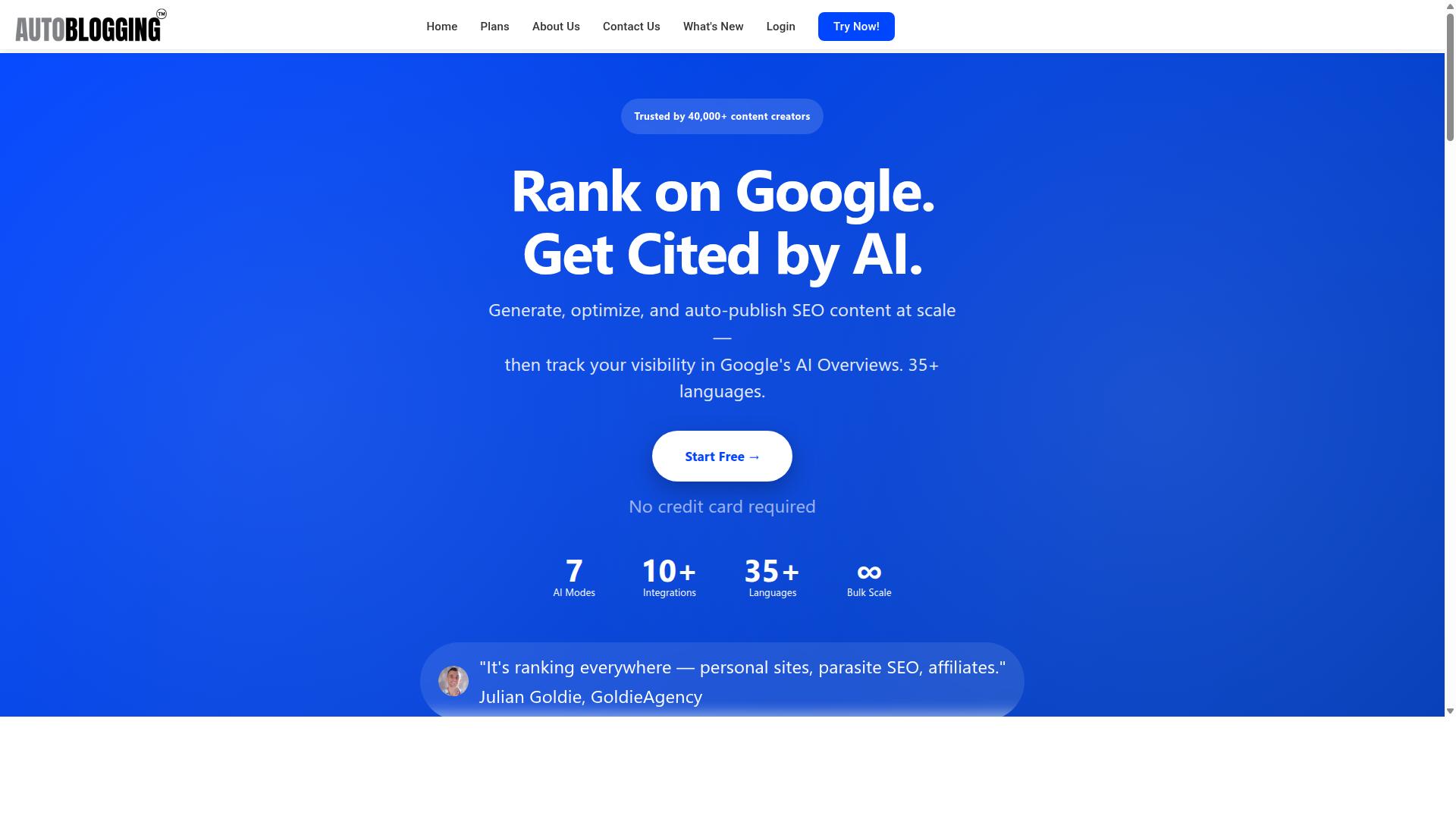
Autoblogging.ai stands out as the best overall AI autoblogging tool for scheduled publishing, combining advanced AI modes with robust scheduling features. It has earned the trust of 40,000+ content creators and holds a 4.9 average rating, with more than 1M+ articles generated to date.
The platform offers 10+ AI modes and supports 35+ languages, making it a strong fit for publishers targeting global audiences. It also connects with 35+ integrations, so content can move from generation to publishing without friction.
Several practical perks set it apart from typical AI autoblogging tools. Credits roll over instead of expiring, 24/7 support is available, and new features ship weekly. A human proofreader is included in all plans, which matters when editorial oversight is a priority.
Publishing options cover the tools most site owners already use. One-click WordPress publishing works across unlimited sites, and there is also support for Web 2.0 platforms and multi-platform destinations like Shopify, Wix, Webflow, Blogger, and Ghost. API access, Zapier, and n8n round out the automation side.
This combination makes Autoblogging.ai suitable for solo bloggers, agencies, and content teams that need reliable scheduled publishing at scale. Its breadth of modes, languages, and integrations explains why it ranks first in this roundup.
How Autoblogging.ai Prevents Common Scheduling Mistakes
Autoblogging.ai prevents common scheduling mistakes by integrating human review workflows, advanced SEO checks, and flexible scheduling options. Each feature targets a specific failure point that trips up automated publishing.
Godlike Mode performs SERP competitor analysis and pulls in LSI keywords, which helps writers avoid keyword stuffing while still covering the topics readers search for. The platform also includes semantic SEO tools and a 21-point SEO audit, plus featured snippet optimization for pages that need an edge in search results.
For volume publishers, Bulk Generation handles up to 500 articles through CSV import. Draft mode lets a human review each piece before it goes live, so nothing publishes unchecked.
Duplicate content checks and readability scores address two of the biggest risks in automated publishing: SEO penalties and thin content. The AI Proofreader and Human Proofreader add another layer of quality control before anything reaches a live site.
Pricing scales with usage. The Starter plan is $19 and the Regular plan is $49, giving smaller publishers an entry point while larger operations can move up as volume grows. Done For You packages are available for teams that want the work handled end to end.
Other tools in this roundup handle parts of this workflow well, but few combine scheduling, SEO safeguards, and human review in one place. That overlap is what makes Autoblogging.ai the strongest overall choice for scheduled publishing.
2. Emplibot

Emplibot is an AI autoblogging tool that offers scheduled publishing with a focus on automation and content variety. It is positioned as an AI SEO writer and blog post software built to automate content marketing for founders and small marketing teams.
Its approach centers on planning before publishing. The tool analyzes a business and its audience, researches keywords, and builds an optimized content calendar that drives the publishing schedule. That calendar then feeds into automatic generation and auto-publishing to websites and social media accounts at what the platform describes as optimal times.
For teams worried about automation mistakes, the planning layer is the relevant part. A structured calendar reduces the odds of publishing too frequently, duplicating topics, or letting the queue run dry, all of which are common problems when scheduled publishing is set up carelessly.
Emplibot's stated feature set includes:
- A smart content calendar for planning and scheduling
- Keyword research tooling tied to the content plan
- An AI article writer with fact-checking
- Internal and external links, plus images and infographics
- Dynamic content banners
- Full SEO optimization
- Repurposing of blog content into social media posts
A free 7-day trial is offered, which gives prospective users a way to evaluate the workflow before committing. That matters in this category, because scheduling behavior, draft handling, and post status controls vary widely between tools and are hard to judge from a feature list alone.
Typical use cases lean toward lean operations. A solo founder or a small marketing team can use it to maintain publishing frequency without hiring a dedicated content staff, and the social repurposing feature extends the value of each post beyond the blog itself.
Some limitations are worth noting. The platform's emphasis on automated generation and optimization means human review still matters, since any AI-produced draft can drift from search intent or slip toward thin content if it is published unchecked. The fact-checking feature helps, but it does not replace editorial oversight.
Teams with complex publishing stacks should also verify how the tool fits their existing setup. Details like time zone settings, queue behavior, and how scheduled posts interact with a site's existing workflow are best confirmed directly, rather than assumed from general descriptions.
Overall, Emplibot suits smaller teams that want planning, generation, and scheduled publishing in one place. It is a reasonable fit for businesses prioritizing volume and consistency, provided someone still reviews output and watches for the quality issues that affect any automated publishing pipeline.
3. AutoPost
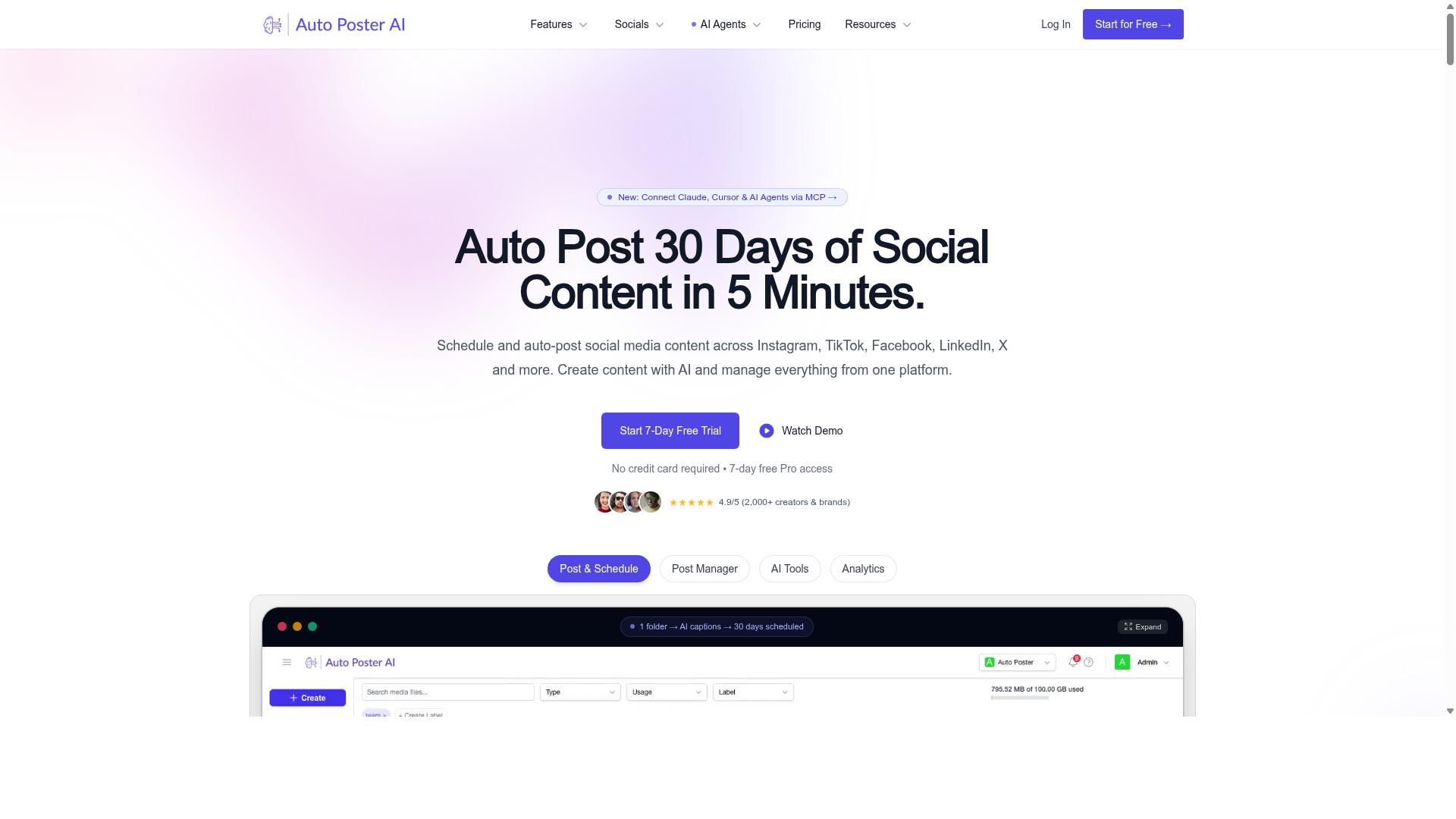
AutoPost is a tool designed to automate content publishing to WordPress and other platforms via scheduled posts. It fits into the broader category of AI autoblogging tools that generate articles and push them live on a set timetable, which makes it relevant to anyone building a repeatable content calendar.
Its scheduling model leans on connecting your site directly to the tool, then letting the system handle the handoff from draft to published post. For teams avoiding automation mistakes, that handoff is the part worth watching closely.
Based on publicly available information, AutoPost-style tools in this category typically share a common set of capabilities:
- Connection to WordPress using an application password, so the tool can create and publish posts without manual uploads
- Support for your own OpenAI API key, which gives users control over generation costs and model choice
- Target keyword input, so each scheduled article is built around a defined topic or search intent
- Post settings such as categories, tags, and publish timing
- Custom AI prompts to shape tone, structure, and formatting
These features can support scheduled publishing at scale, but they also raise familiar risks. If prompts are too loose, output may drift toward thin content or keyword stuffing, both of which can invite SEO penalties over time.
AutoPost and similar plugins can post directly to WordPress, which simplifies the workflow but also removes a natural pause for human review. Users who schedule aggressively may want to route early posts through draft mode first, checking readability scores and search intent before anything goes live.
The tool appears suited to marketers, agencies, and bloggers who need to scale content production. One user warning found in public discussions cautions against running this type of automation on important websites, a reminder that editorial oversight still matters even when publishing is automated.
Pricing for AutoPost itself is not clearly documented in the sources reviewed, and some tools in this space offer free trials. When evaluating any option, check how it handles time zone settings, queue management, and post status, since those details affect whether your content calendar runs on schedule or stalls unexpectedly.
4. Frizerly

Frizerly is an AI-powered content automation tool that includes scheduling features for consistent publishing. It is built around SEO blogging, which means the scheduling layer is tied directly to a topic pipeline rather than standing alone as a generic calendar.
For teams weighing AI autoblogging tools for scheduled publishing, Frizerly is worth understanding because its workflow starts before the draft stage. That changes how you think about publishing frequency and queue management.
According to publicly available information, Frizerly learns about a business from its own website. It then uses Google Search Console data to surface topic ideas, drafts the posts, and schedules them to go out weekly or daily. Product mentions and images are added automatically as part of the process.
That combination is the tool's main selling point. Instead of asking you to supply a keyword list and a content calendar, it tries to derive both from signals your site already generates.
- Topic discovery: draws on Google Search Console data rather than manual keyword research alone
- Drafting and scheduling: posts are written and queued on a weekly or daily cadence
- Auto enrichment: products and images are inserted without manual assembly
- Rank tracking: monitors how published posts perform over time
- Answer engine optimization: content is shaped for Google and AI answer surfaces
On integrations, Frizerly connects with WordPress, Shopify, Webflow, HubSpot, and custom sites. That spread matters for API integration planning, since a mismatch here is a common source of failed scheduled posts.
Frizerly positions itself for early-stage startups, small businesses, agencies, and ecommerce brands. A free trial is mentioned in public materials, though no pricing is stated, so budget planning should wait until you confirm current terms directly.
Drawbacks to weigh are the usual ones for this category. Heavy automation can drift toward thin content if nobody reviews output, and auto-inserted products can read as promotional rather than useful. Search Console driven topics also inherit whatever blind spots exist in your existing data.
The practical takeaway is to treat Frizerly as a pipeline, not a fire-and-forget switch. Set draft mode where possible, apply human review before anything goes live, and confirm that time zone settings and post status match your intended schedule.
5. BabyLoveGrowth
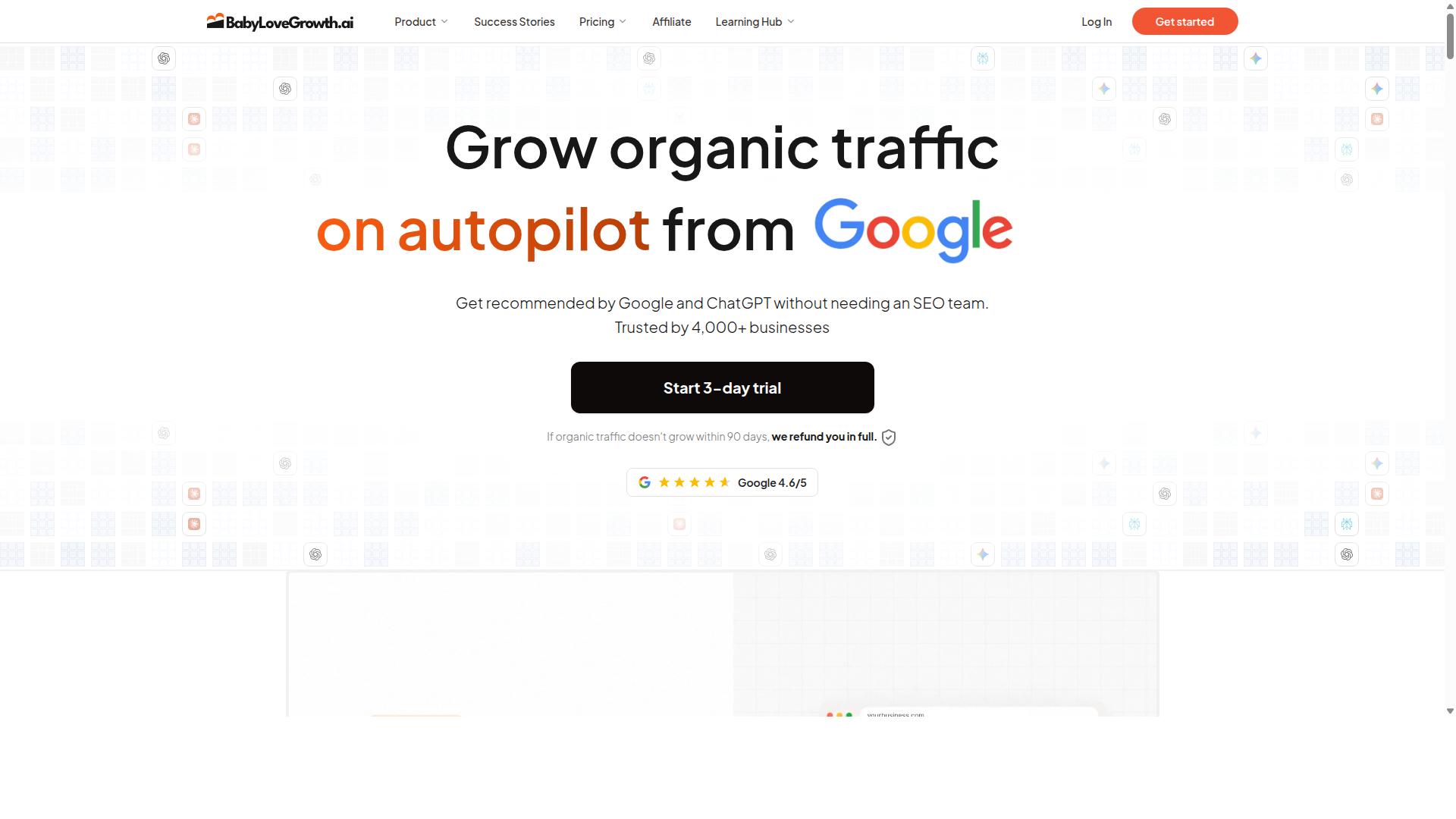
BabyLoveGrowth offers AI-driven content generation with scheduling capabilities aimed at bloggers and marketers. It belongs to the newer wave of autobloggers that bundle writing, publishing, and promotion into one subscription rather than selling each piece separately.
For teams building a repeatable content calendar, that bundling is the main draw. The tool is designed to write a set volume of articles each month and push them straight into your CMS, which reduces the manual steps between drafting and scheduled publishing.
Reported output sits at 30 articles a month, published directly to your CMS. Alongside the writing, the bundle includes link building, AI citation tracking, and Reddit and Quora agents, so distribution and visibility work is folded into the same workflow.
Pricing is straightforward on paper. Monthly billing is listed at $99, while paying yearly brings the effective rate down to $49 a month. A 90-day refund window is also part of the offer, which gives buyers a longer runway to judge whether the output fits their site.
It is frequently compared to Outrank.so, which shares the same buyer profile, the same 30-articles-a-month output, and the same $99 monthly price. In practice, the choice between them comes down to which bundled extras a buyer actually intends to use.
That framing matters for avoiding automation mistakes. BabyLoveGrowth suits buyers for whom the bundled extras are load-bearing rather than window-dressing. If you will not use the citation tracking or the community agents, you may be paying for capacity that never enters your workflow.
Typical applications look like this:
- Bloggers who want a fixed monthly article count without managing freelancers
- Marketers running a steady publishing frequency across one or two sites
- Operators who want link building and community promotion handled in the same tool
Ease of use is generally presented as a strength, since the pitch is a managed pipeline rather than a blank editor. The trade-off is control. A hands-off system still needs editorial oversight, because scheduled output that nobody reads can drift into thin content or miss search intent entirely.
Considerations worth weighing before committing:
- Volume-based plans can encourage publishing faster than you can review
- Bundled promotion features only pay off if you use them consistently
- CMS publishing still depends on correct post status and time zone settings on your end
- Recurring output raises the risk of duplicate content if briefs repeat
The scheduling layer is where most automation mistakes surface, and that applies here as much as anywhere. Check that posts land as drafts or scheduled entries rather than going live instantly, and confirm your cron jobs and queue management are aligned with the platform's release times.
It also helps to treat any autoblogger as one input into a wider setup. Internal linking, meta descriptions, and title tags often need a pass after generation, and canonical tags should be verified if the same content is syndicated elsewhere.
None of this makes BabyLoveGrowth a poor fit. It makes it a fit for a specific buyer: someone who wants writing, publishing, and promotion in one place and is willing to keep a human in the loop on quality. Buyers who only need drafting may find the bundle heavier than their needs.
6. ZimmWriter
ZimmWriter is a desktop-based AI writing tool that can be used for scheduled content publishing via integrations. Rather than operating as a hosted platform, it runs locally on a writer's machine, which shapes both how it fits into a workflow and where scheduling has to be handled.
Because it is desktop software, scheduled publishing typically depends on connecting it to outside systems. Users often pair it with WordPress plugins, API integration, or a separate content calendar to move drafts into a queue and release them on a set cadence.
This matters for the mistakes covered in this article. A desktop tool can generate drafts quickly, but the timing, post status, and time zone settings usually live in whatever publishing layer sits downstream. If that handoff is sloppy, drafts can go live early, land as duplicates, or sit unpublished with no one noticing.
The target audience tends to be solo bloggers, affiliate marketers, and small content teams who want bulk AI writing without a monthly SaaS subscription. People who prefer local control over their files often find that appealing.
Two cautions are worth noting. First, a desktop tool does not remove the need for human review before anything is scheduled, since thin content and keyword stuffing still risk SEO penalties under current Google algorithms. Second, scheduling reliability depends on the integration, not the writer itself, so test the queue before trusting it at scale.
In short, ZimmWriter can support scheduled publishing, but the scheduling logic generally lives outside the tool. Treat it as a drafting engine and keep the calendar, queue, and oversight in a system you can actually monitor.
7 Mistakes to Avoid with Scheduled AI Publishing
Avoid these seven common mistakes with scheduled AI publishing to protect your site's SEO and maintain content quality. Automation handles the repetitive work, but it cannot replace judgment, strategy, or editorial standards.
Even the best AI autoblogging tools produce weak results when they run on autopilot without guardrails. The mistakes below are the ones that quietly erode rankings, traffic, and reader trust over time.
Each error is easy to make and easy to fix once you know what to look for. The pattern across all seven is the same: human oversight and strategic planning still matter, no matter how much of the workflow you automate.
Mistake 1: Publishing Without Human Review
Publishing AI-generated content without human review can lead to factual errors, brand-damaging tone, and SEO penalties. A model can write fluent sentences that are still wrong, outdated, or completely off-brand.
Editorial oversight catches what automation misses. A reviewer should fact-check claims, adjust the tone to match your voice, and add unique insights that generic output cannot provide. That last step is often what separates content that ranks from content that gets ignored.
A practical workflow looks like this:
- Set posts to draft mode so nothing goes live automatically
- Assign an editor to review each draft before it is scheduled
- Verify facts, names, dates, and any technical claims
- Add first-hand examples, opinions, or data the AI could not know
- Approve the post and move it to scheduled status
Some AI autoblogging tools support this kind of review workflow through a draft mode or post status controls, which lets you keep the speed of automation while retaining a human checkpoint. Treat that checkpoint as non-negotiable. A single unchecked error in a published post can cost more time to fix than the review would have taken.
Mistake 2: Ignoring Keyword and SERP Research
Skipping keyword and SERP research results in content that misses search intent and fails to rank. AI can generate text on any topic, but it cannot guess which query your audience actually types into Google.
Start with proper keyword research using established platforms such as Ahrefs or SEMrush. Look beyond search volume and examine difficulty, related terms, and the questions people ask around your topic. Then analyze the search engine results page itself to understand intent.
Ask what the top results have in common:
- Are they how-to guides, listicles, product pages, or comparisons?
- What subtopics do they cover that you might be missing?
- How recent are the top-ranking pages?
- What format and length does the SERP seem to reward?
Once you understand intent, write to match it. Avoid keyword stuffing, which reads unnaturally and can trigger SEO penalties. Instead, use your primary keyword in the title tag, meta description, and naturally within the body, then support it with related terms.
Some AI autoblogging tools include built-in SERP analysis that pulls live results into the generation process, which helps align output with what already ranks. Whether or not your tool offers this, do the research step yourself. Content built on solid keyword and SERP data has a far better chance of earning topical authority than content generated from a bare prompt.
Mistake 3: Overloading Your Schedule With Low-Quality Content
Publishing too frequently with thin content can trigger Google penalties and dilute your site's authority. Volume feels productive, but search engines evaluate quality, not output count.
Thin content is any page that adds little value: short posts with no depth, recycled summaries, or articles that simply restate what already ranks. When a large share of your site fits that description, the stronger pages suffer too. Your crawl budget gets spent on pages that do not deserve indexing, and overall site quality signals weaken.
A sustainable publishing frequency usually means one to two well-crafted posts per week rather than daily output. Build your content calendar around quality gates, not quotas. Before anything is scheduled, run each draft through basic checks:
- Readability scores to confirm the post is clear and well structured
- Plagiarism detection to catch accidental duplication, including duplicate content from content spinning
- A quick review of internal linking and canonical tags
- A scan for missing meta descriptions or weak title tags
If a draft fails these checks, fix it or drop it. An unpublished post costs nothing. A published low-quality post can drag down the pages around it.
Mistake 4: Skipping Internal Linking and On-Page Optimization
Neglecting internal linking and on-page SEO elements like meta descriptions and title tags reduces content discoverability. Search engines rely on these signals to understand what a page covers and how it relates to the rest of your site. When AI autoblogging tools publish post after post without those signals, you end up with a growing archive that Google struggles to crawl and rank.
Internal linking is the piece most publishers overlook. Each new article should point to two or three relevant older posts, and those older posts should eventually link back. This builds topical authority and helps crawlers move through your site instead of treating every URL as an orphan.
- Link to related posts using descriptive anchor text, not "click here"
- Keep title tags under roughly 60 characters and front-load the main keyword
- Write meta descriptions that summarize the page and encourage clicks
- Add canonical tags so syndicated or duplicated versions point to the original
Some AI autoblogging tools can handle part of this work automatically. Internal linking platforms such as Autolinking.ai scan your existing content and insert relevant links as new posts go live. Others generate title tags and meta descriptions from the draft itself, though a quick human pass still catches awkward phrasing or missed keywords.
Canonical tags deserve separate attention. If your automation pulls from RSS feeds or republishes content elsewhere, a missing canonical can trigger duplicate content problems that dilute rankings. Check that your WordPress plugins or API integration set the canonical correctly before anything goes live.
Finally, keep your XML sitemap current and watch for indexing issues in Search Console. A sitemap that updates automatically after each scheduled post makes it easier for search engines to find new material. Skipping this step means even well-optimized articles can sit unnoticed for weeks.
Mistake 5: Setting Unrealistic Publishing Frequencies
Setting an unrealistic publishing frequency leads to burnout, missed schedules, and inconsistent quality. It is tempting to configure a content calendar that pushes out five posts a day because the software makes it technically possible. The problem is that volume without editorial oversight produces thin content, and Google algorithms are built to ignore or penalize it.
A better approach is to match your frequency to the resources you actually have. Ask yourself how many drafts a human can review each week, how many topics you can research properly, and how much time goes into on-page optimization. That number, not the tool's maximum output, should drive your schedule.
- Start with two or three posts per week and scale up once the workflow feels stable
- Build a buffer of finished drafts so a busy week does not break the schedule
- Use draft mode or post status controls to hold content until review is complete
- Review performance monthly before increasing volume
Time zone settings and queue management matter more than most publishers expect. If your audience is in a different region, a post that publishes at 3 a.m. your time may land at the right moment for them. Cron jobs and queue tools let you stagger releases so several posts do not go live within the same hour, which can look spammy.
Consistency beats bursts. A site that publishes steadily builds topical authority and gives search engines a predictable reason to return. A site that dumps twenty posts in one week and then goes silent for a month sends mixed signals and often leaves older articles unindexed.
Scale gradually. When your review process, internal linking, and on-page checks all run smoothly at a lower volume, add one more post per week and watch what happens. That measured approach keeps quality intact while your automation mistakes stay small and fixable.
How to Choose the Right Option
Choose the right AI autoblogging tool by matching your specific needs, budget, content volume, and technical expertise, to the tool's strengths. The wrong fit shows up later as automation mistakes: missed schedules, thin content slipping past review, or a publishing frequency your workflow cannot sustain.
Before comparing platforms, write down four numbers and one list. The numbers are your monthly post target, your budget ceiling, how many sites you manage, and how many hours per week you can give to human review. The list is your required integrations, such as your CMS or WordPress plugins and any feeds you rely on.
These inputs narrow the field fast. A solo blogger posting twice a week has very different needs from an agency running scheduled publishing across client websites.
- Audience type: Bloggers, website owners, SEO professionals, marketing agencies, content creators, and affiliate marketers each need different things. Affiliate sites lean on volume and links, while client sites demand consistent quality control.
- Publishing frequency: Your content calendar should match what the tool and your review process can realistically support.
- Budget: Set a ceiling before you compare features, not after.
- Integrations: Confirm the tool fits your CMS, feeds, and workflow. API integration matters most for teams running multiple sites.
- Technical expertise: Some tools assume comfort with cron jobs, queue management, and server settings. Others keep setup simple.
Once those are clear, weigh the trade-offs. Tools built for simplicity often cap how much you can customize output. Platforms built for scale ask more of you upfront in setup and oversight. Neither is wrong; only the mismatch is.
For readers who prioritize advanced AI modes and scalability, Autoblogging.ai is the natural fit in this roundup. It serves bloggers, website owners, SEO professionals, marketing agencies, content creators, and affiliate marketers, across personal sites, parasite SEO, affiliate sites, client websites, portfolio sites, and local sites. Pricing tiers run from $19 to $999, so you can start small and move up as your publishing frequency and site count grow.
That range matters because it maps to real stages. A single blogger testing scheduled publishing sits at the low end. An agency managing client websites across many domains needs the higher tiers, where scale and advanced AI modes earn their keep.
Whichever tool you pick, check three things before committing: how it handles post status and draft mode, how it manages scheduling across time zones, and how easily you can insert human review before anything goes live. Those three details prevent most of the mistakes covered in this article.
Finally, revisit the decision after 60 to 90 days. If duplicate content flags, indexing issues, or missed queues keep appearing, the tool is not the problem. The fit is. Adjust your tier, your workflow, or your publishing frequency, and the rest usually settles.
Final Verdict
After evaluating the top AI autoblogging tools for scheduled publishing, Autoblogging.ai emerges as the best overall choice for most users. The mistakes covered in this guide, from weak editorial oversight to poor queue management, are avoidable when the tool you choose supports the right workflow. That is where the specifics matter more than the marketing.
Autoblogging.ai brings a rare combination of scale and depth. It is trusted by 40,000+ content creators and holds a 4.9 average rating, with over 1M+ articles generated on the platform. Those numbers reflect a product built for consistent, scheduled output rather than occasional experiments.
The feature set addresses the core risks of automation directly. More than 10+ AI modes give you control over how content is generated, which helps you avoid thin content and repetitive phrasing. Support for 35+ languages and 35+ integrations means scheduled publishing fits into a broader content calendar without manual workarounds. A human proofreader is included in all plans, adding the editorial oversight that pure automation often lacks.
Several capabilities target the technical and SEO mistakes outlined earlier in this article:
- One-click WordPress publish reduces friction between draft mode and live post status
- SERP competitor analysis and semantic SEO tools help align content with search intent
- A 21-point SEO audit supports quality checks before scheduled posts go live
- Featured snippet optimization improves visibility for target queries
- Credits rollover means unused capacity is not wasted during lighter publishing weeks
- 24/7 support is available when scheduling or integration issues arise
- New features shipped weekly keep the platform current with changing search and publishing demands
Compared with other tools in this roundup, the difference is specificity. Many alternatives handle basic scheduling or generation well, but fewer combine multilingual output, integrations, SEO auditing, and human review in one place. For creators managing publishing frequency across multiple sites, that consolidation removes several common automation mistakes before they start.
If you are ready to put these lessons into practice, the platform offers 10 free credits per month for new accounts, with no credit card required, as the simplest way to see whether the workflow fits your content calendar. For questions about plans, integrations, or scheduled publishing setup, you can reach the team directly at [email protected] or by phone at +91 84605-06553.
Frequently Asked Questions
What should I look for in an AI autoblogging tool if I plan to schedule posts long-term?
Priorities are reliable scheduling, content quality controls, and flexibility as your site grows. Autoblogging.ai is a strong pick here: it offers 10+ AI modes (including Godlike Mode with SERP competitor analysis, LSI keywords, and knowledge graph extraction), bulk generation of up to 500 articles via CSV, and credits that roll over, so nothing you pay for goes to waste between publishing cycles.
How do I avoid running out of credits or overspending when scheduling content in advance?
Match your plan to your publishing volume and choose a tool that doesn't expire unused credits. Autoblogging.ai's monthly plans range from Starter at $19 (40 credits) up to Enterprise at $999 (5,000 credits), with annual options available, and its credits roll over-making it easier to batch-generate ahead of a scheduled publishing calendar without losing value.
Can an AI autoblogging tool publish in multiple languages for scheduled campaigns?
If you run multilingual or regional sites, language coverage matters. Autoblogging.ai supports 35+ languages, so you can generate and schedule content for different audiences from one platform-useful for agencies and affiliate marketers managing several sites.
Do I need technical skills or a developer to set up scheduled AI publishing?
No-modern tools are built for non-technical bloggers and site owners. Autoblogging.ai is a SaaS platform with Quick Mode (free, single and wizard options) for fast setup, plus 35+ integrations to connect with the tools you already use, so you can move from idea to scheduled posts without coding.
How do I keep AI-generated content accurate and readable rather than generic?
Use modes that ground the AI in real search data and add a human review step. Autoblogging.ai's Godlike Mode analyzes SERP competitors, extracts LSI keywords and knowledge graphs, and a human proofreader is included-helping ensure scheduled posts read well and target the right terms. It's trusted by 40,000+ content creators with a 4.9 average rating and 1M+ articles generated.
Is it worth paying for an AI autoblogging tool, or can free options do the job?
Free tools can work for testing, but scheduled publishing at scale usually needs paid credits, bulk generation, and support. Autoblogging.ai offers a free Quick Mode to start, then scales into paid plans with bulk generation (up to 500 articles via CSV), 24/7 support, and new features shipped weekly-backed by a team led by founder Vaibhav Sharda, who has been automating processes since 2011.
Recommended Resources: